
Sleep is one of my favorite things to talk about with patients, especially my overachievers. We all know how important it is, yet we push it to the bottom of our health "priority list." We tell ourselves, "I’ll catch up over the weekend," or "I just need to finish this one project, then I’ll get back on track."
I’m going to burst your bubble: Your brain doesn’t work that way.
If you want to move toward optimal mental and physical health, you have to take your sleep seriously. Take a look at my cat, Clove, when he was a kitten. (I was happy to sneak this pic of him in). If you know anything about cats, you know they sleep a lot! That isn't by happenstance. That sleep allows them to operate at peak performance and keep up with their body’s metabolic demands. The same is true for us.
Why Sleep Must Be a Non-Negotiable
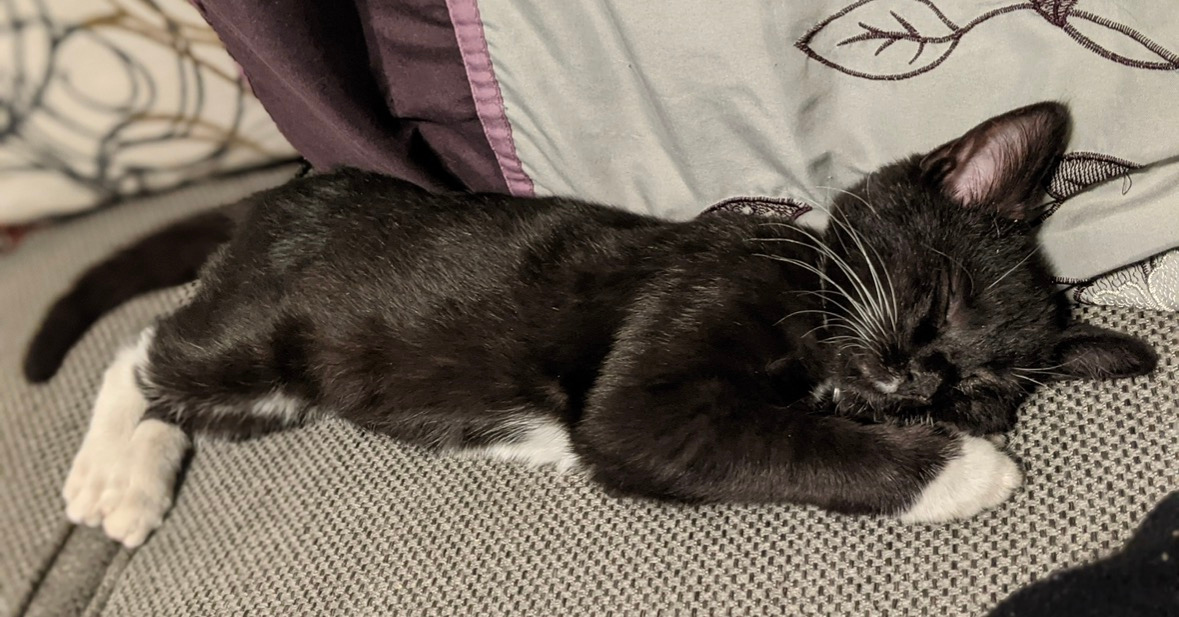
Clove, circa 2020
The Science
During deep sleep, your brain’s glymphatic system kicks into gear. Think of it as a nightly janitorial crew for your neurons. During the day, your brain creates metabolic waste products as a byproduct of intense thinking and stress.
If you don't sleep, that waste doesn't get cleared out. You’re essentially leaving trash in your brain. When that accumulates, you experience the classic symptoms: brain fog, irritability, poor focus, and low energy.
It’s not just your head that takes the hit, though. Long-term sleep deprivation has profound physiological consequences that affect your entire system:
Hypertension: elevated blood pressure
Hormonal Chaos: low testosterone, insulin resistance (increasing your risk of diabetes), weight gain or difficulty losing weight.
Weakened Immunity
Mental Health Escalation: Long-term insomnia often intensifies clinical conditions like generalized anxiety, panic disorders, and depression. A not-so-fun fact: the average person can develop hallucinations after 24–48 hours without sleep. Trust me, that’s not an experiment you want to try.
When you skip out on your 7–9 hours, you aren’t just "pushing through"—you’re trying to drive a car with a faulty engine. No amount of willpower or caffeine can override that physiological reality.
How Do Sleep Aids Fit into the Equation?
You’ve heard of Trazodone or Ambien, common prescribed hypnotics (sleep aids), that aren't inherently bad. However, I prefer a conservative, holistic approach first. I often incorporate magnesium, melatonin, or L-theanine into care plans as natural alternatives.
Sometimes, a prescription is necessary to bridge the gap, but my goal is never to keep you on a medication forever. I am about building habits that sustain you for the long term.
Bottom Line
Sleep isn't the opposite of productivity; it is the fuel for it. If you want to perform at your peak and feel your best, you have to value the downtime just as much as the uptime.
If you are interested in learning more about sleep and are ready to get yours back on track, this is your invitation to reach out to me and start the conversation.
Disclaimer: Sunnyside Comprehensive Care provides expert psychiatric care in North Carolina, South Carolina and Virginia. This content is for informational purposes only and does not constitute medical advice. Please consult with a qualified psychiatric provider to discuss your specific clinical needs.
-
Your bedroom should be for the two S's: Ssleep and…you know the other. Get blackout blinds, control the temperature, and clear the clutter. Most importantly, keep work and work devices out. Train your brain that entering the bedroom is the signal to your brain and body to wind down.
-
Pick your ideal wake-up time and count backward. Finish your last meal/drink at least 2 hours before bed (ideally sooner) and power down electronics at least 1 hour before you close your eyes. Yes, that means no TV in bed.
-
Don’t roll over to check your phone when you wake in the morning. Instead, pull back the blinds or step outside for a few minutes. Natural sunlight signals your circadian rhythm (your internal alarm clock) to turn on your "get up and go" hormones and suppress the "sleepy time" ones. It starts the timer so your body knows when to wind down in the evening.
-
Most of my patients have been dealing with poor sleep for months or even years. You aren't going to fix it in two nights. You are re-regulating your body's chemistry and wiring. It may take weeks, but if you remain consistent, you can train your body and mind to get back on track.